
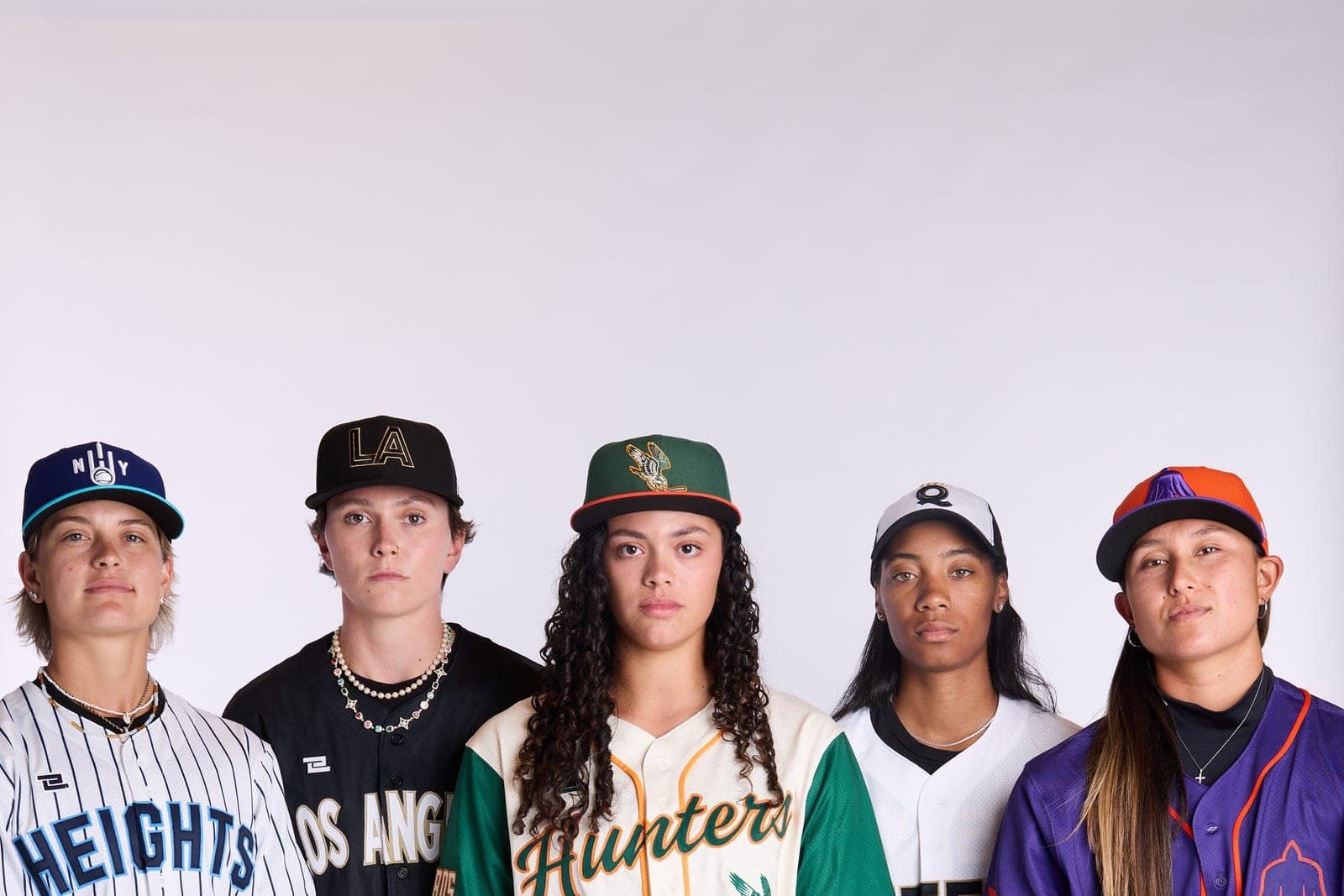
Kelsie Whitmore wanted to play baseball in the big leagues from the age of six, and learned early to keep that to herself. The correction always came from outside: play softball instead. It is a redirection almost every woman in this story describes receiving.
This Saturday the Women's Professional Baseball League plays its first game, and the redirection stops being the only option.
Why there was nowhere to go
Women's baseball is not like women's football or basketball, where a path exists even if it is underfunded. There has been no path at all. Girls have been allowed to play Little League since 1974, but there are no girls' teams to move into afterwards, and no college programme to aim at.
The economics push the same way. A scholarship in softball is real money and a route through university, so girls get nudged toward it when the bill arrives. One player, Lansdell, played baseball in her freshman year at Georgia Highlands College already thousands of dollars in debt before a softball scholarship changed the calculation.
Whitmore had the same experience in reverse. Cal State Fullerton offered her a full scholarship to play softball, and she describes it as the last thing on earth she wanted, precisely because it was what everyone had always steered her toward.
The last comparable American league, the All-American Girls Professional Baseball League, existed because men had gone to fight in the Second World War. That is the gap this weekend closes.
How the league was built
Discussions started a couple of years ago when Keith Stein, a lawyer and chief executive of Toronto's Maple Leafs Baseball Club, approached Justine Siegal, the first woman hired as a coach by an MLB club and founder of the access nonprofit Baseball for All.
They raised money from investors and announced the league formally in October 2024. More than 600 players tried out within the year. Four cities were selected, the teams drafted, and the first season set at 30 games, all of them played at Roberts Regional Stadium in Springfield, Illinois.
The opening fixture is New York against San Francisco, and the first pitch goes to Blair, who is 99 and played in the original league.
Who is playing
The roster spans the United States and more than ten other countries, including Australia, Canada, South Korea, Mexico and Venezuela. The backgrounds differ and the biography does not: every one of them fought to keep playing, usually on boys' teams, usually against advice.
Siegal's summary of what that produces is the sharpest line in the whole story. When you survive a system built for boys and men, she says, you become a considerable ballplayer.
What it took to believe it
The most telling detail is how little any of them expected this. Whitmore assumed a women's league was something that might exist for a daughter she had not had yet. One of the Los Angeles players says that when the first social media posts about the WPBL appeared, she assumed a fan had invented it.
There have been attempts before. The Colorado Silver Bullets fielded an all female team through the nineties against men's independent and Single-A sides, televised, proving the point to anyone watching. It did not survive.
Siegal's view of the obstacle is not about talent or audience. What holds the sport back in the United States, in her account, is a belief people have absorbed rather than examined: that girls play softball and boys play baseball.