
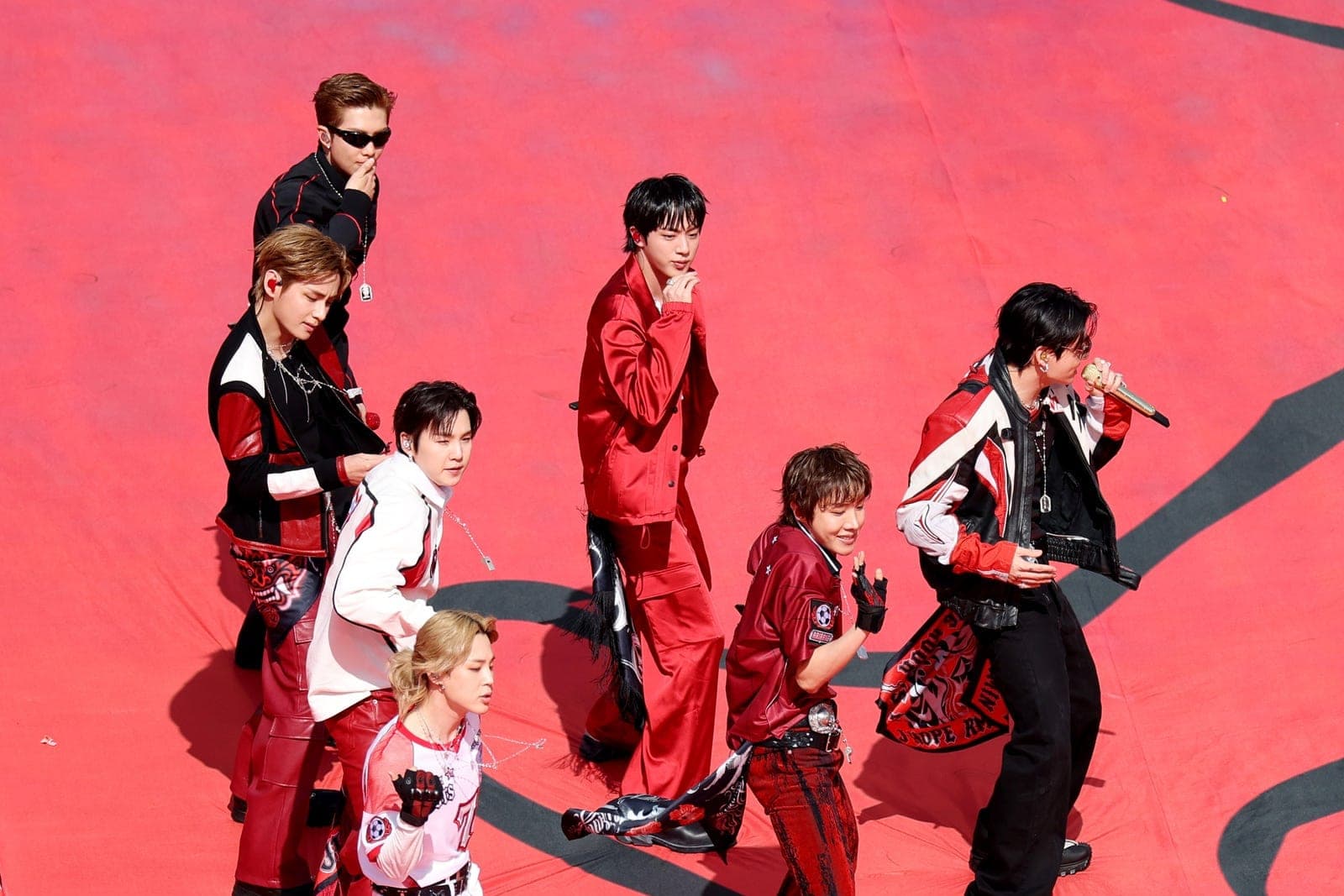
Writing in ELLE, the author Valorie Lee Schaefer describes the moment a piece of music opened something she had kept shut for most of sixty years. It happens about two minutes into a BTS song, and she has not managed to hear it calmly since.
Han, and what it carries
Her essay starts at the Han River, which runs across Seoul and collects families and couples along its banks over fried chicken and instant ramyeon bought from the corner shop. Then it moves to the other han, the word for a grief that never quite closes, a wound carried in the chest and, in the common telling, handed down a family line.
In that account han is not only injury. It is also what held people together through occupation, war, partition and poverty, and what drove the construction of modern South Korea inside seven decades.
Wisconsin, 1962
Born in South Korea in 1960, Schaefer was placed for adoption with a white household in Wisconsin, among the roughly 200,000 children moved out to America and Europe in the years following the Korean War. She arrived at O'Hare in March 1962 in a red snowsuit, and worked out her position in the new arrangement quickly.
There was no hallyu then. No Korean dramas, no Korean skincare aisle, no K-pop, and nothing remotely enviable about being Korean in rural Wisconsin. She lists the slurs handed to her by children who could not have found Korea on a map, and the instruction to go back where she came from, delivered to a girl with no idea where that was. Her strategy was to get through each day unnoticed. What she wanted, she writes, was to erase herself before anyone else managed it.
Her parents loved her and had no idea how to help, and she took care not to point out the ways she was different in case it counted against her. She left the town as soon as she could.
The album
Arirang, the first BTS record in four years, arrived in March and took the sales records apart on contact: 4.17 million copies in the opening week, a million of them inside ten minutes, more than 110 million Spotify streams on the first day, and three consecutive weeks at the top of the Billboard 200.
It marked the reunion of all seven members after their compulsory military service, and the campaign opened with BTS: The Comeback Live, streamed on Netflix from Gwanghwamun Square in Seoul at 8pm Korean time on March 21, watched by more than 18.4 million people across 80 countries.
Two minutes into Body to Body
Schaefer was not a member of ARMY. She knew the hits, liked the rap line, and was curious enough to set an alarm and be sitting in front of the television at 6am with a mug of green tea.
The show opened with Body to Body, three minutes of music built for a dance floor. Then, on the way into the bridge, the group folds in a sample of Arirang, the Korean folk song that goes back roughly six hundred years. It enters quietly, swells against traditional instruments and a choir, and then clears out as the track sprints to its finish.
She started crying the instant it arrived. The choral passage is sung in Korean, a language she does not speak, so the words were not the trigger. She notes that this was a lot to work through before breakfast.
Why that melody
Arirang sustained Koreans through Japanese rule, when the language was forbidden and the country's own songs could only be sung out of earshot. Its subject is exile, displacement and wanting to go home.
She is not alone in the response. Social media filled up with clips of Korean listeners weeping at that stretch of the song, something closer to inherited memory than to taste. Other adoptees have told her it made them feel more Korean, and converted shame they had carried their whole lives into something nearer to pride.
The album is an argument
Schaefer reads the title as deliberate. BTS have absorbed casual and open racism from the American and European press since their debut in 2013, and in July the group said they would sit out the Grammy Awards rather than be filed into the newly created category for Best Asian Pop Music Performance. Being partitioned off like that, she writes, was a familiar door closing.
The record answers by being unmistakably Korean and hiding references throughout. Body to Body nods to Hand in Hand, the song from the 1988 Seoul Olympics. The third track, Aliens, takes on xenophobia, demands respect for Korean custom, shoes off indoors included, and name checks Kim Koo, the independence leader. The album turns at No. 29, which is a minute and forty seconds of a bell being struck: the Sacred Bell of Great King Seongdeok, South Korea's National Treasure number 29.
Schaefer stood on Korean ground again last year, 63 years after being exported as a so called orphan. What she could not have predicted is that the thing to break the seal would be a boy band.