
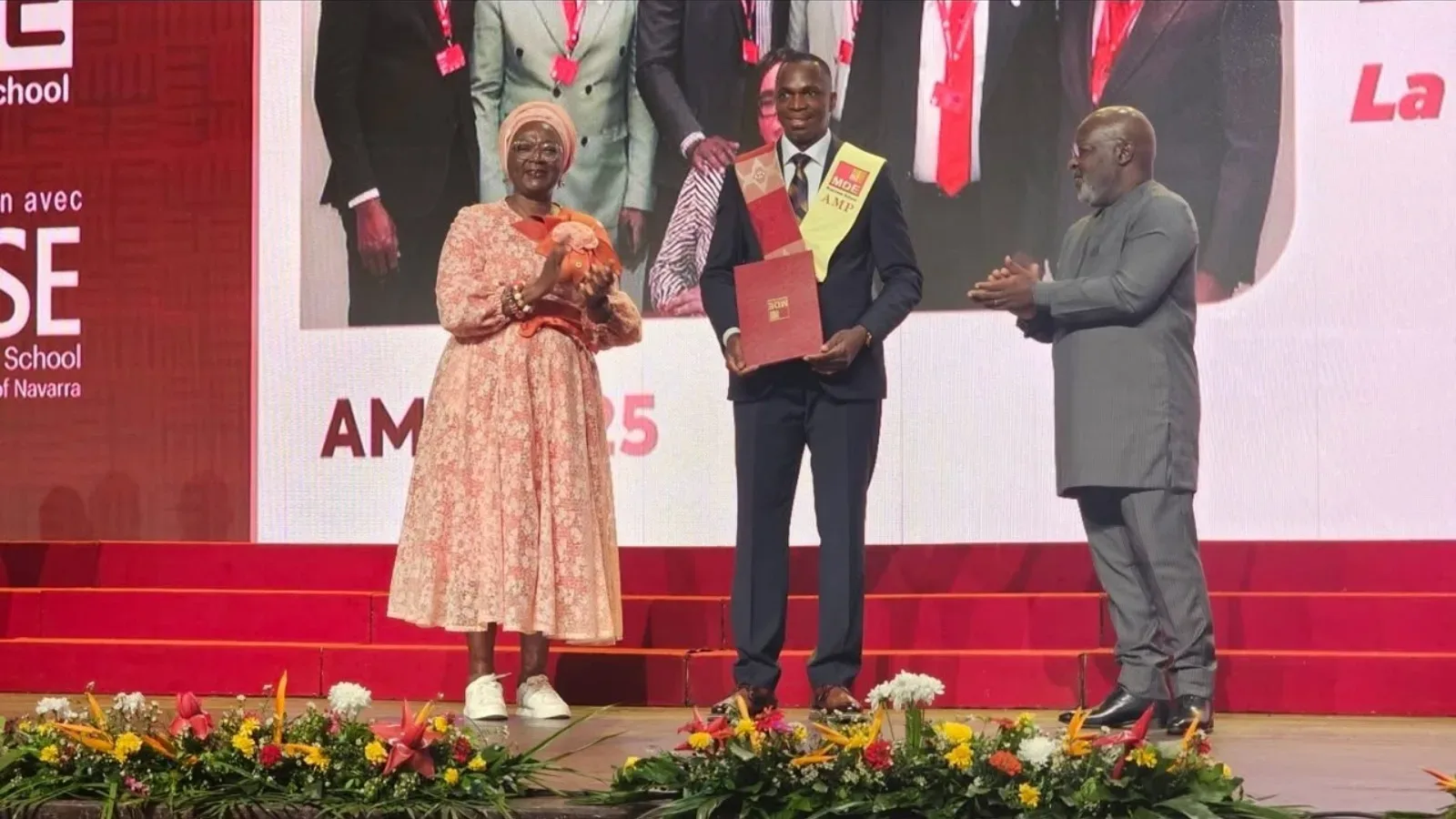
ABIDJAN, CÔTE D'IVOIRE : To the casual observer, West Africa’s economic growth is measured in soaring GDP figures, rising glass towers, and expanding urban perimeters. But to Dr. Jules KONAN, the true metric of a society's advancement lies entirely out of sight: beneath the asphalt, inside the drainage channels, and along the subterranean pipelines that keep a metropolis alive.
As the founder and managing director of Ingénierie & Travaux Akoutrou (ITA), Dr. Konan has spent 17 years tackling the quiet, structural crises that accompany explosive population growth. In a region where rapid urbanization frequently outpaces municipal planning, his firm has emerged as the premier master of urban hydraulics, sanitation, and heavy civil engineering.
Holding world-class ISO 9001 and ISO 45001 certifications, ITA was recently catapulted into the national spotlight after receiving the highly coveted National Quality Excellence Award from the Ivorian government. Yet, behind the corporate accolades is a leader who views heavy engineering not as a business of pouring concrete, but as a systematic science of urban survival.
The Calculus of Water
Dr. Konan's highly analytical approach to public works (BTP) was cultivated at the Institut National Polytechnique Félix Houphouët-Boigny (INP-HB) in Yamoussoukro, Côte d'Ivoire's most prestigious crucible for elite scientific minds. It was there that he developed a profound respect for mathematical exactness—a trait that defines his leadership style today.
While many construction firms focus primarily on the visible surface—building roads and bridges—Dr. Konan has built ITA’s reputation on mastering the invisible element that threatens them: water.
"You cannot build a sustainable city if you do not know how to manage its water," Dr. Konan observes. "An exceptional road corridor will disintegrate within a few rainy seasons if the urban hydraulics and drainage networks beneath it are improperly engineered. At ITA, we design from the subsurface upward. We calculate for the extreme weather events of tomorrow, not just the averages of today."
A Three-Pronged Shield for the Modern City
Under his direction, ITA has deployed a cross-functional technical framework that addresses the three most critical vulnerabilities of rapidly expanding West African hubs:
- Potable Water Infrastructure: Designing and executing high-capacity adduction networks to deliver clean water to newly developed municipal zones.
- Stormwater and Wastewater Management: Engineering advanced drainage systems to mitigate catastrophic seasonal flooding in dense urban environments.
- Civil Works and Crossings: Building durable road networks, bridges, and structural crossings engineered to withstand both heavy traffic and intense environmental stress.
By fusing these three disciplines into a single operational workflow, Dr. Konan has eliminated the fragmented, siloed approach to construction that historically plagued regional development projects.
The Price of Autonomy
In the heavy infrastructure sector, relying on external variables is a massive risk. Early in ITA's trajectory, Dr. Konan made the bold corporate decision to reject the industry-standard practice of renting heavy equipment or relying extensively on unpredictable subcontractors. Instead, he channeled the company’s capital back into building a massive, proprietary fleet of cutting-edge heavy machinery.
This total asset ownership has given ITA absolute logistical sovereignty. Because the firm owns its supply chain and specialized equipment, it remains completely insulated from the delays and bottlenecks that frequently stall major public works across the continent. For state authorities and municipal planners, an ITA project represents guaranteed scheduling certainty and uncompromised execution speed.
Engineering a Corporate Mindset
Despite managing millions of dollars in mechanical assets, Dr. Konan insists that ITA’s most vital asset is its human capital. He has intentionally structured the company around a model of "collective intelligence," intentionally dismantling rigid corporate hierarchies to give young, local engineers unprecedented autonomy on major job sites.
This rigorous internal culture of discipline, training, and strict safety procedures is what ultimately caught the attention of national award committees and global ISO auditors alike.
As West African nations continue to invest heavily in their long-term structural resilience, Dr. Jules Konan's data-driven, autonomous approach offers an invaluable blueprint. He has proven that the complex challenges of urban growth cannot be outsmarted by superficial fixes—they must be meticulously engineered from the ground up.