
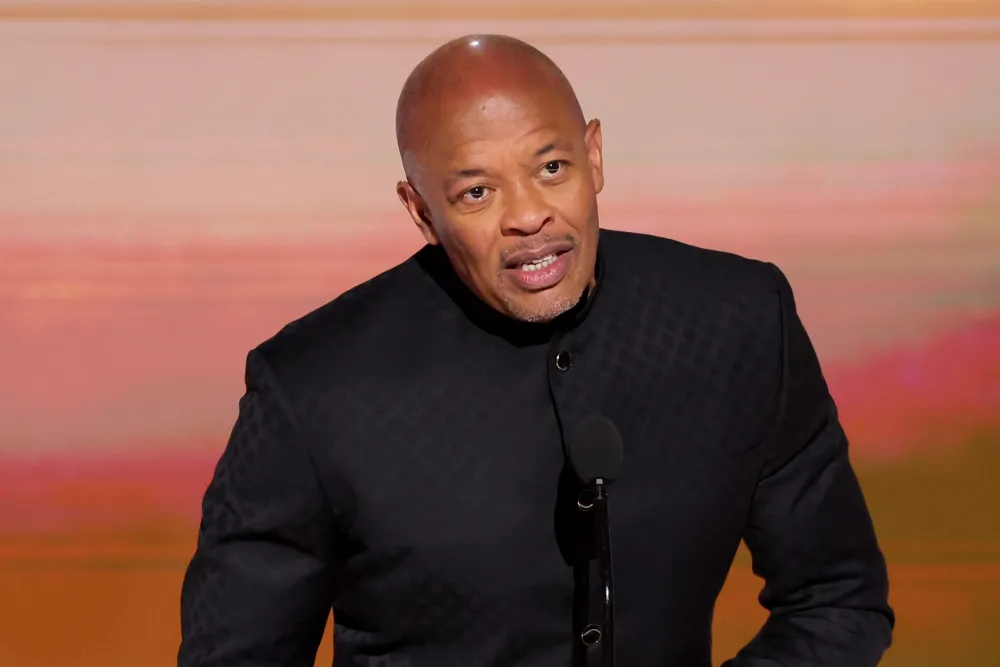
Dr. Dre has waded into the increasingly heated debate over artificial intelligence in the music industry, arguing that resistance to the technology says more about an artist's creative limitations than about AI itself. According to Variety, the hip-hop producer and Beats co-founder said he views AI not as an existential danger but as simply another tool available to musicians and producers.
Dre, who built his reputation as one of the most influential producers in hip-hop history through work with N.W.A, Snoop Dogg, Eminem and countless others, drew a direct comparison between AI and the synthesizer, an instrument that was once met with its own wave of skepticism before becoming a foundational element of modern music production. That comparison frames his overall argument: technologies that initially unsettle an industry often end up expanding what is creatively possible rather than replacing the people doing the creating.
The comments arrive at a moment when AI's role in music has become one of the most contentious issues facing the entertainment industry. Major labels, songwriter guilds and performing artists have spent the past several years grappling with questions about AI-generated vocals, synthetic instrumentation, and tools capable of mimicking an artist's voice or style without their direct involvement. Lawsuits, licensing negotiations and new legislation have all emerged as the industry tries to define where AI fits into existing frameworks for royalties, ownership and creative credit.
Dre's remarks, as reported by Variety, suggest he sees much of the industry's anxiety as misplaced, or at least overstated. His framing positions AI skepticism as a reflection of an individual artist's confidence and skill set rather than a legitimate structural threat to the craft of music-making. It's a stance that aligns him with a segment of veteran producers and executives who argue that tools have always shaped music history, from the drum machine to digital audio workstations, without erasing the value of human artistry.
His position also carries particular weight given his dual role in both music and technology. As co-founder and CEO of Beats, the audio company later acquired by Apple, Dre has operated at the intersection of hardware innovation and creative production for well over a decade. That vantage point gives him a perspective shared by relatively few figures in the music world, one that treats emerging technology as a business and product opportunity as much as an artistic one.
Not everyone in the industry shares his optimism. Songwriters and session musicians in particular have voiced concern that AI tools trained on existing catalogs could undercut opportunities for working musicians, particularly those who provide instrumentation, background vocals or production work that AI systems are increasingly capable of approximating. Organizations representing performers have pushed for clearer consent and compensation rules governing how an artist's voice or likeness can be used to train AI models.